Why Are Z Type Bucket Elevators Becoming More Popular in Packaging and Processing Lines?
In food processing, pharmaceutical production, and small bulk material packaging, vertical conveying may seem like a simple part of the production process. In reality, it can easily become a bottleneck for the entire packaging line.
Traditional belt conveyors and screw conveyors are still widely used, but they can present some challenges when handling fragile or sensitive products. Product damage, material spillage, dust, cleaning difficulties, and limited floor space are all common concerns.
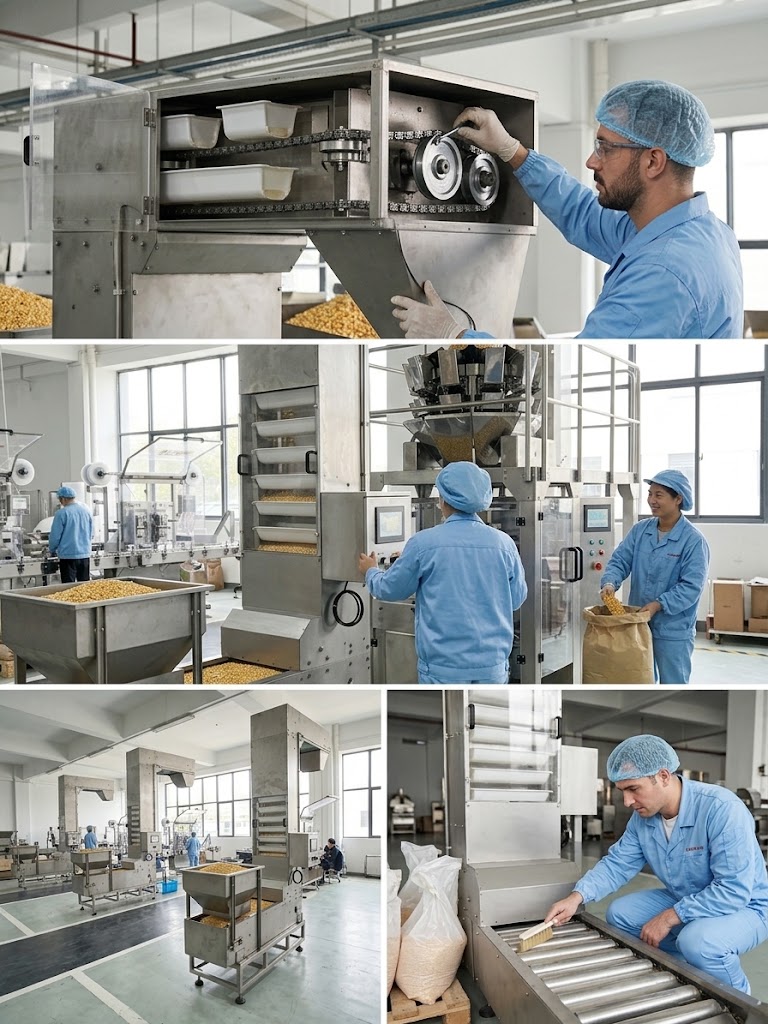
This is one reason why more manufacturers are turning to Z Type bucket elevators for vertical material handling.
With a compact Z-shaped conveying path, enclosed structure, and gentle product handling, a Z Type bucket elevator can integrate efficiently with weighing and packaging equipment while helping manufacturers maintain product quality and production hygiene.
So, what makes this type of conveyor so popular?
1. Gentle Conveying Helps Reduce Product Damage
When fragile products are transferred between different stages of a production line, excessive impact and friction can lead to broken or damaged products.
A Z Type bucket elevator uses individual buckets to carry the material through the conveying process. Instead of continuously pushing or rubbing the product along a conveyor surface, the material remains inside the bucket as it moves upward.
This relatively gentle conveying method is particularly useful for products that can be easily damaged, such as:
- Potato chips and other snack foods
- Nuts and dried fruits
- Candy and confectionery
- Seeds and agricultural products
- Pharmaceutical tablets and capsules
- Small hardware and other bulk components
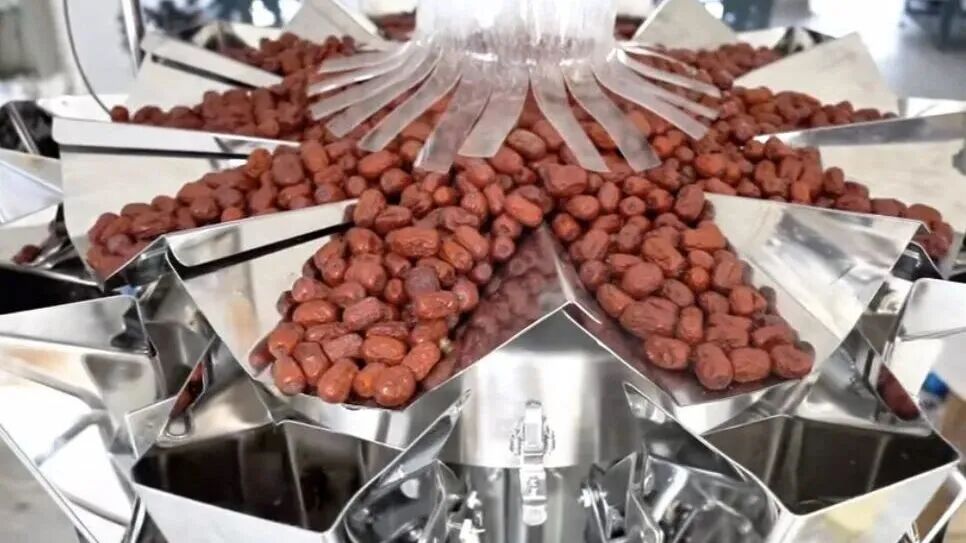
For example, when feeding products to a multihead weigher, the buckets can transport the material steadily from a lower feeding point to an elevated discharge point, helping reduce unnecessary impact during transfer.
The actual level of product protection will depend on factors such as product characteristics, bucket design, conveying speed, and machine configuration, but gentle bucket conveying can be a practical option for handling fragile bulk products.
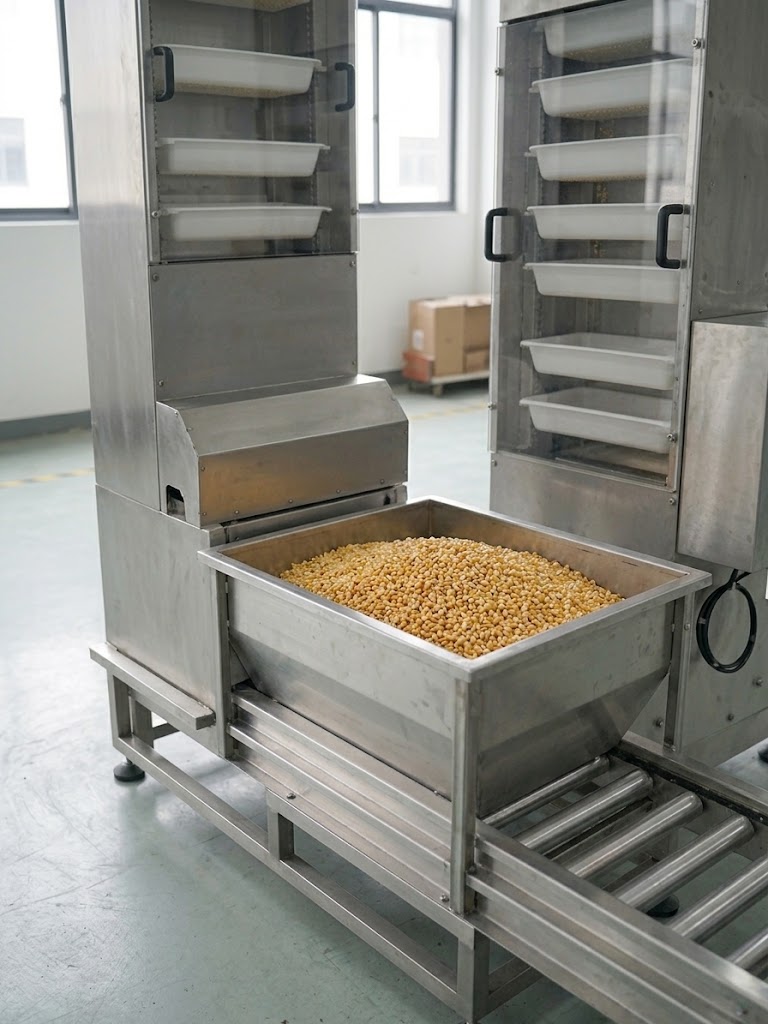
2. An Enclosed Design Helps Improve Hygiene and Dust Control
In food and pharmaceutical production, keeping the conveying process clean is just as important as moving the product efficiently.
An enclosed Z Type bucket elevator helps isolate the material from the surrounding production environment. It can also help contain dust generated during the conveying process, depending on the material and machine design.
This provides several practical benefits:
Reduced Risk of Contamination
An enclosed conveying path helps prevent external dust and other contaminants from coming into direct contact with the product.
At the same time, for dusty materials, the enclosure can help reduce the amount of dust escaping into the production area.
Easier Visual Inspection
Many Z Type bucket elevators are equipped with transparent inspection windows or covers. Operators can check the movement of the buckets and observe material flow without having to open the entire machine.
This makes routine inspection more convenient and can help operators identify abnormal conditions at an early stage.
For facilities with strict hygiene requirements, the overall machine design can also be configured with stainless steel construction and food-grade components to meet specific production requirements.
3. The Z-Shaped Layout Saves Valuable Floor Space
Factory floor space comes at a cost, particularly in modern production facilities where multiple machines need to work together within a limited area.
A conventional inclined conveyor may require a relatively long conveying path to reach the required height. This can take up considerable floor space.
A Z Type bucket elevator uses a different layout:
Low-level feeding → Vertical lifting → High-level horizontal discharge
This compact Z-shaped configuration allows the machine to achieve vertical elevation without requiring a long inclined conveyor.
More importantly, it can be positioned alongside other packaging equipment, such as:
- Multihead weighers
- Vertical form-fill-seal machines
- Premade pouch packing machines
- Automatic weighing and packaging systems
This makes it easier to build a compact and continuous material handling system.
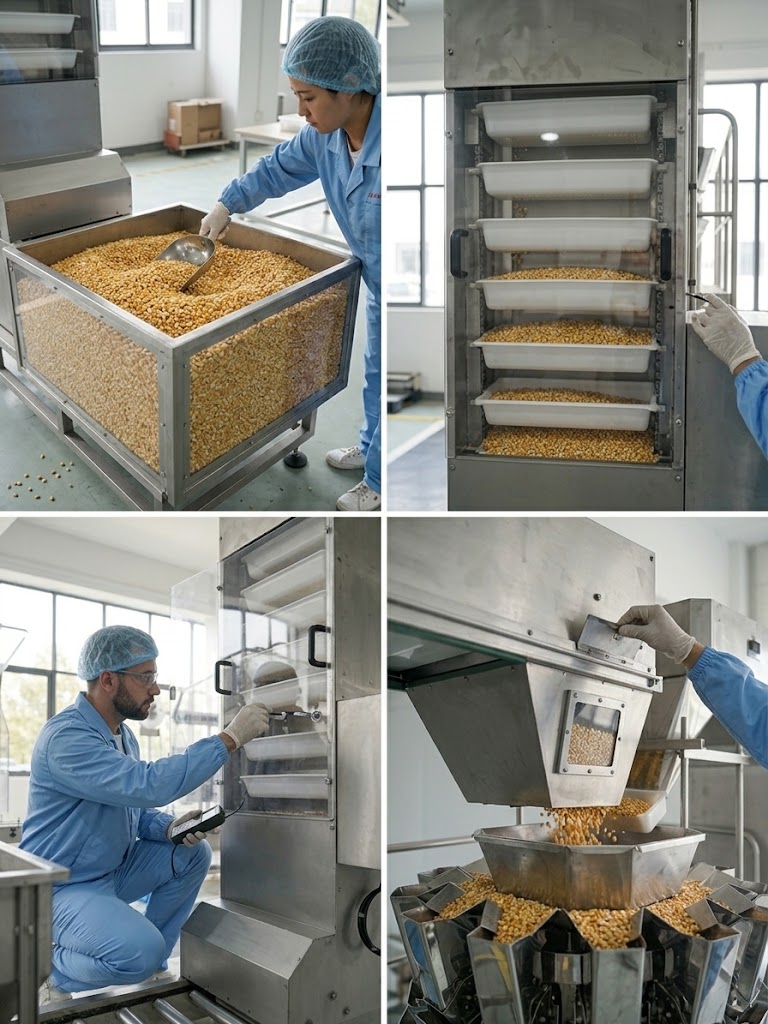
4. Cleaning and Maintenance Can Be More Convenient
For food and pharmaceutical manufacturers, cleaning is not something that happens occasionally. Equipment may need to be cleaned regularly between production runs, product changes, or shifts.
Z Type bucket elevators can be designed with easy-access components to make routine cleaning and maintenance more manageable.
Depending on the machine configuration, features may include:
- Stainless steel contact parts
- Food-grade plastic buckets
- Easy-access inspection covers
- Removable buckets
- Accessible conveying components
These features can make it easier for operators to clean the equipment and inspect key components, potentially reducing downtime during product changeovers.
Of course, cleaning requirements vary depending on the material being handled and the industry's hygiene standards. For applications involving food or pharmaceutical products, the machine should be designed according to the specific production and sanitation requirements.
5. Easy Integration with Automated Packaging Lines
A bucket elevator is not usually a standalone piece of equipment. Its real value comes from how well it works with the rest of the production line.
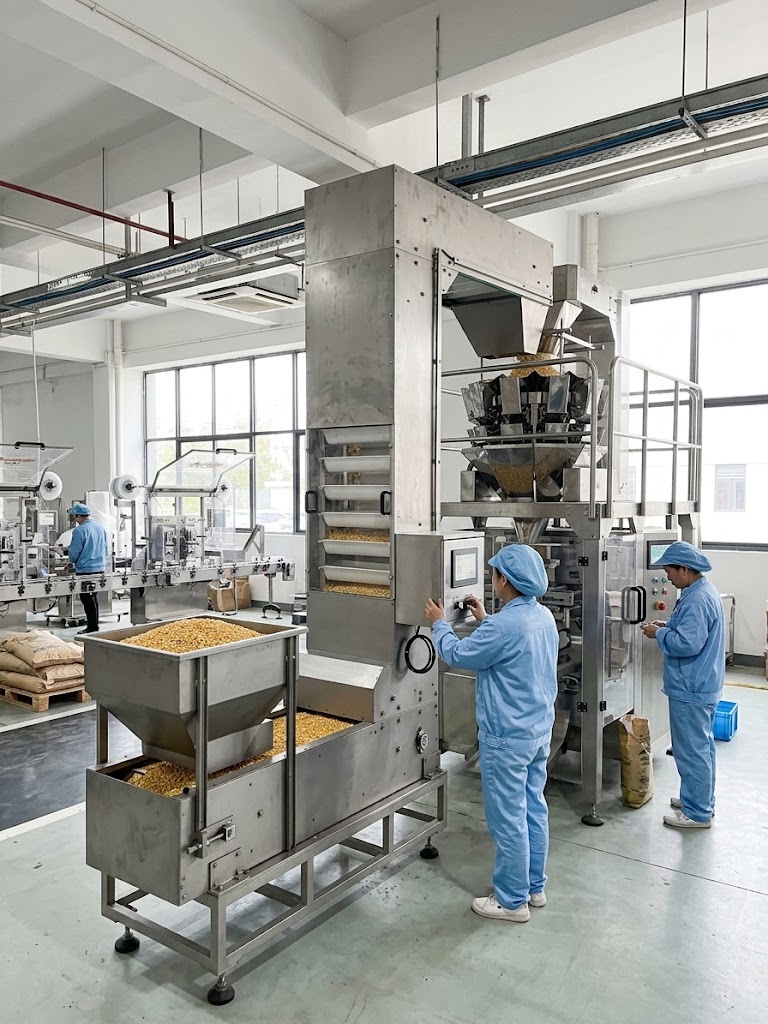
A Z Type bucket elevator can be configured to feed materials from a lower-level hopper or conveyor to equipment installed at a higher level.
For example, a typical system may look like:
Feeding Hopper → Z Type Bucket Elevator → Multihead Weigher → Packaging Machine
The elevator continuously supplies product to the weighing system, while the weighing and packaging equipment handles the downstream processes.
This type of layout can help create a more continuous and automated material flow, reducing the need for manual material handling between machines.
What Should You Consider When Choosing a Z Type Bucket Elevator?
Not every Z Type bucket elevator is suitable for every product or production line.
Before selecting a machine, manufacturers should consider several factors:
Material characteristics:
Is the product fragile, sticky, dusty, abrasive, or irregularly shaped?
Required capacity:
How many kilograms per hour does the production line need to handle?
Lifting height:
What is the vertical distance between the feeding point and discharge point?
Bucket size and material:
The bucket design should match the product characteristics and required conveying capacity.
Hygiene requirements:
Food and pharmaceutical applications may require stainless steel construction and specific food-grade materials.
Integration requirements:
The elevator needs to match the height, speed, discharge position, and control system of the downstream equipment.
Choosing the right configuration is often more important than simply choosing a machine with a higher conveying capacity.
Is a Z Type Bucket Elevator Right for Your Production Line?
A vertical conveyor does much more than simply move products from one height to another.
For modern automated packaging lines, the conveying system also needs to protect product quality, maintain a hygienic production environment, use factory space efficiently, and work reliably with downstream equipment.
This is where Z Type bucket elevators can offer a practical solution.
For fragile bulk products, space-constrained facilities, and automated food or pharmaceutical packaging lines, their combination of gentle conveying, compact layout, enclosed construction, and flexible integration makes them a widely used option for vertical material handling.
If you are planning a new packaging line or upgrading an existing one, the right conveying solution should be selected based on your product characteristics, capacity, lifting height, hygiene requirements, and downstream equipment rather than relying on a one-size-fits-all configuration.
How to Choose a Tablet & Capsule Counting Machine? 4 Key Factors to Consider
Related Article