How HFFS Technology Is Shaping the Future of Flexible Packaging — An Insight from HENGLI PACK
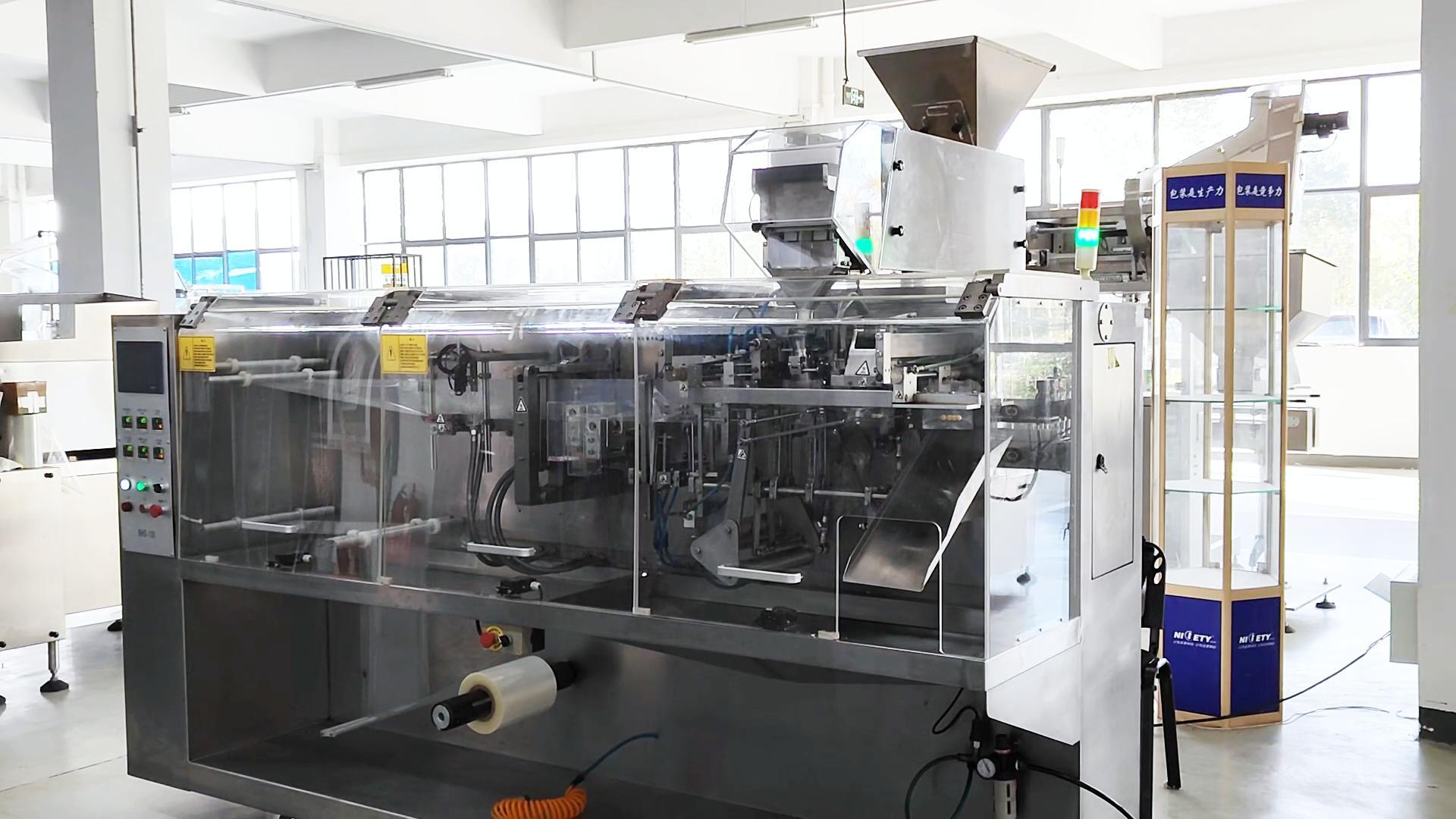
In recent years, we’ve seen a clear shift in the packaging industry: higher product variety, faster market cycles, and increasing expectations for consistent, professional-looking pouches. For factories that handle daily production pressure, these changes often expose the limits of manual or semi-automatic packaging processes.
At HENGLI PACK, we work closely with manufacturers in food, pharmaceuticals, daily chemicals, and other fast-growing sectors. Across these industries, one trend is particularly evident—the move toward Horizontal Form-Fill-Seal (HFFS) systems.
This article is not about promoting a machine. Instead, it’s our observation from years of field experience: why more factories are adopting HFFS, what’s really happening on the production floor, and how this technology is quietly reshaping packaging standards.
Film Instead of Premade Bags: A Practical Change with Real Impact
One of the biggest differences with HFFS machines is the use of roll film instead of premade pouches.
At first glance, it sounds like a simple switch. But on the factory floor, it changes three things immediately:
Material cost drops — Roll film is significantly more economical.
Bag quality becomes more consistent — Because the bag is formed on the machine.
Production becomes more predictable — No more waiting for supplier lead times or dealing with inconsistent pouch quality.
For many of our clients, these three points alone make a noticeable difference within the first month of running an HFFS line.
From our engineering experience, the real value of HFFS is not in how “high-tech” it sounds, but in how stable it can run under real-world production conditions.
1. Film handling matters more than people think
If tension is not steady, everything after it starts to go wrong—printing misalignment, wrinkled seals, poor pouch geometry.
This is why servo-controlled film pulling and precise registration systems have become standard on our HFFS lines.
This is why servo-controlled film pulling and precise registration systems have become standard on our HFFS lines.
2. Accurate dosing defines true efficiency
Whether it’s powder, granules, tablets, or liquids, each dosing system must match the machine’s rhythm.
We have seen factories speed up packaging simply by upgrading the dosing system—not the machine itself.
We have seen factories speed up packaging simply by upgrading the dosing system—not the machine itself.
3. Seal integrity is the real gatekeeper
A good-looking pouch means nothing if the seal is weak.
Modern HFFS lines control temperature, pressure, and sealing time with high precision so the final product survives transport, stacking, and shelf life demands.
Modern HFFS lines control temperature, pressure, and sealing time with high precision so the final product survives transport, stacking, and shelf life demands.
4. Changeovers show whether a machine is built well
Today’s SKU diversity requires frequent size changes.
A well-designed HFFS line should adjust quickly without long downtime—a trend we see in every market.
A well-designed HFFS line should adjust quickly without long downtime—a trend we see in every market.
Why More Manufacturers Are Turning to HFFS
Across different industries, we hear the same things repeatedly:
“Our labor cost is increasing.”
Automation helps keep lines running steadily without relying heavily on manual handling.
“We need cleaner, more presentable packaging.”
HFFS produces uniform, retail-ready pouches that reflect better brand quality.
“We have too many product varieties now.”
Flexible changeovers allow factories to handle multiple SKUs on the same line.
“We need to reduce waste and lower total cost.”
Roll film usage and controlled sealing reduce material loss.
For us at HENGLI PACK, these are not industry buzzwords—they are real issues we hear during every customer visit.
A Technology Aligned with Industry’s Next Stage
As packaging demands grow more complex, factories are no longer asking for machines that simply “run fast.”
They want equipment that is:
They want equipment that is:
- Stable over long production hours
- Easy to maintain
- Flexible with new packaging formats
- Transparent in data and diagnostics
- Cost-efficient in the long term
HFFS technology naturally fits into this direction. And with the integration of sensors, data monitoring, and more refined mechanical design, it is becoming a key part of modern packaging lines.
From our work in domestic and international projects, one pattern stands out:
Factories succeed when their packaging lines become predictable and scalable.
Factories succeed when their packaging lines become predictable and scalable.
The Horizontal Form-Fill-Seal system is not a “new trend” — it’s a practical tool that helps manufacturers reach this stability. As industries move toward higher output and smaller SKU batches, we believe HFFS will continue to play an important role in flexible packaging for the next decade.
At HENGLI PACK, our focus is simple: Build packaging equipment that runs reliably in real production environments, not just on paper. And HFFS technology is one of the directions where this philosophy aligns perfectly with industry demand.
Turning Away Orders Due to Labor Shortages? How One Chocolate Factory Scaled Up with Automation
A Proud Milestone: HENGLI PACK Wins Third Prize in Pharmaceutical Equipment Innovation!